what you get here

This is not a blog which opines on current events. It rather uses incidents, books (old and new), links and papers to muse about our social endeavours.
So old posts are as good as new! And lots of useful links!

The Bucegi mountains - the range I see from the front balcony of my mountain house - are almost 120 kms from Bucharest and cannot normally be seen from the capital but some extraordinary weather conditions allowed this pic to be taken from the top of the Intercontinental Hotel in late Feb 2020

Sunday, May 8, 2011

The Myopic General class - time to let the troops loose


For those not aware, the heading I gave to yesterday’s post was from "that play” by Shakespeare (it’s apparently bad luck for actors to refer to the play’s name!!)
Out, out, brief candle!
Life's but a walking shadow, a poor player,
That struts and frets his hour upon the stage,
And then is heard no more. It is a tale
Told by an idiot, full of sound and fury,
Signifying nothing.
Macbeth Act 5, scene 5, 19–28

I was pleased to find out that I will not be the only one in Varna next week questioning the conventioanl wisdom. In a quieter way, another paper – by Canadian Professor Leslie Pal – sets out some of the instruments which have been used by the OECD to try to get the sort of public management reform it thinks necessary. It looks at an important report OECD published in 2009 which, unfortunately, is behind a pay wall. But his paper summarises its main themes and argues that -
the OECD report contains a direct critique of New Public Management (NPM) and three questions that governments were urged to ask themselves in the search for a new governance paradigm. The critique of NPM noted that due “to lack of data and numerous challenges in measuring outputs and outcomes, governments have a difficult time in determining whether the reforms have really resulted in efficiency gains.” But it goes further:
New Public Management has exacerbated the traditional separation between politics and administration, between policy decisions and their implementation. Dismantling organisations also sometimes led to a loss of continuity, institutional memory and long-term capacity. The focus on contracting and reporting may have come at the expense of coherence of strategy, continuity of values and connecting public interest to individual motivation.
In addition, many governments have not developed sufficient oversight capacity, increasing the threat of provider capture. Often, governments adopted reform instruments or ideas from the private sector or from other governments without regard for the country context and/or understanding the inherent limitations and weaknesses of these instruments. (OECD 2009a: 33)
In a sober tone reminiscent of (its earlier neo-liberal tomb) "Modernising Government", the report asked whether a “new paradigm” was needed: “…OECD member countries may need to reassess what has worked well in past 25 years, what has not and why, what might be discarded from those reforms, what needs to be adjusted, what might be further built upon and what are the conditions for success.”
The three questions were (1) How can countries achieve a better balance between government, markets and citizens?, (2) What governance capacities or competencies are needed for dealing with global challenges?, and (3) How can a continued focus on efficiency and effectiveness be reconciled with upholding other fundamental public service values?
The discussion in connection with the third question was telling. While governments would continue to emphasize performance in terms of efficiency and effectiveness, the concept of performance – in light of the challenges of the financial crisis – would have to be broadened to include a government’s ability to uphold “core values such as accountability, transparency and equity.”
I spent the morning reading other papers Professor Pal has written exporing the insidious role the OECD has played in creating what the French would call „La Pensee Unique” in this field of government systems - here and here

I hope to give some more of his analysis tomorrow. I was hoping his material would give me the missing inspiration for the short presentation I have to do at Varna.

- What, basically, am I beefing about? What am I asking for?

A skype discussion with Daryoush helped me on my way.
My plea seems to be for a dialogue about better governance with new actors.
At the moment the dialogue is set by academics and top civil servants (OECD). What we might call the “brain”.

Completely missing is the "backbone" – middle-level officials, politicians, citizens and… consultants like me. In the EC system consultants (“experts”) are the foot soldiers – above us are battalions (companies and Delegations); Generals who are swapping stories and drinking wine – and academics writing about the battles – and noone talks with the troops!! Academics and officials have their (subsidised) Conferences and fora – but not the troopers!

The recent report of the OECD’s Network on Governance’s Anti-corruption Task Team on Integrity and State Building makes part of the point for me
As a result of interviews with senior members of ten donor agencies, it became apparent that those engaged in anti-corruption activities and those involved in the issues of statebuilding and fragile states had little knowledge of each other’s approaches and strategies
.Departmental silos are one of the recurring themes in the literature of public administration and reform – but it is often academia which lies behind this problem with its overspecialisation. „Fragile states” and „Statebuilding” are two new phrases which have grown up only in the last few years – and „capacity development” has now become a more high-profile activity. There are too many specialised groups working on building effective institutions in the difficult contexts my paper focusses on - and too few actually sharing their experiences. We need a road map – and more dialogue!

On a different note, I’ve raged before about management. But this post is a real eye-opener about trends in hgher educartion
As faculty jobs have become increasingly contingent and precarious, administration has become anything but. Formerly, administrators were more or less teachers with added responsibilities; nowadays, they function more like standard corporate managers — and they’re paid like them too.
Once a few institutes made this switch, market pressures compelled the rest to follow the high-revenue model, which leads directly to high salaries for administrators. Even at nonprofit schools, top-level administrators and financial managers pull down six- and seven-figure salaries, more on par with their industry counterparts than with their fellow faculty members.
And while the proportion of tenure-track teaching faculty has dwindled, the number of managers has skyrocketed in both relative and absolute terms. If current trends continue, the Department of Education estimates that by 2014 there will be more administrators than instructors at American four-year nonprofit colleges.

Saturday, May 7, 2011

Sound and fury – signifying nothing?


I’m now at the stage of creating the slides for the 10 minute presentation of my paper at the Varna Conference on 20 May. It’s a deeply depressing (but salutory) experience to have spent several months crafting a 25 page paper (with almost 100 footnotes!) and then find – when you look for the basic message - that it seems to say so little! What does this say about me? Or about the nature of administrative reform? Perhaps that should be the focus of my presentation??

The basic points in the paper are that –
• The EC programme of technical assistance is a multi-billion euros industry and policy field
• The European Court of Auditors published a fairly strong critique in 2007 – which was about its procurement procedures rather than the effectiveness of the tools used
• The EC’s 2008 response – its „Backbone strategy” - basically said that the overstretched staff of its 80 European delegations should try harder to achieve 4 things – demand-driven solutions; better project design; better selection of experts; and more project flexibility (already possible during the inception period). This is a cop out!
• Serious gaps in the analysis were failures to analyse the companies and individual consultants who are the real „backbone” of the TA
• There are too many cowboy companies winning projects by dubious means – and using experts they don’t know; who have arrived in the business by accident; and who receive no training (A paper I had presented to the 2006 NISPAcee Conference had questioned the „accidental” nature of the comeptitive procurement system used by the EC TA)
• The project basis of the EC TA is questionable – it lacks sustainability
• Perhaps there is another model - which strikes a better balance between competition, flexibility and sustainability?
• The second part of the paper looks at the difficult contexts of the EC Neigbourhood countries and suggests that few of the (overly rationalistic) tools in the reform toolbox of the EC will work there
• Change is a mysterious process for which the logframe (a tool for the construction industry) is totally unsuitable. This is recognised in the development industry
• Experts in adminsitrative reform lack insights into these wider development processes – and are stuck at stage one of a four-stage process which has been mapped by development experts
• EC TA is a deeply paternalistic model of change

It's been a useful exercise to list these points. Between now and Monday I have to elaborate them and decide what the slides should actually say for a 10 minute presentation - bearing in mind what the other presentations will be saying!!!

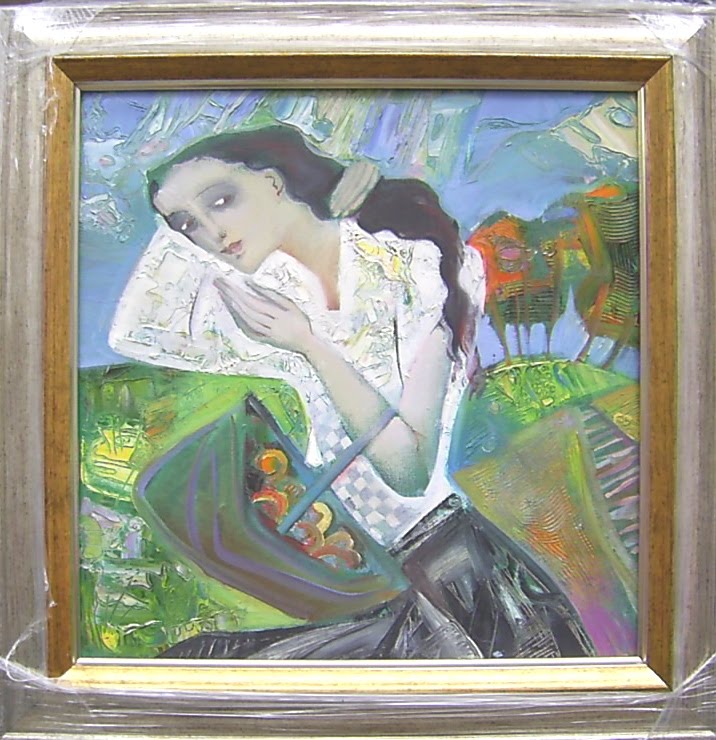
The painting is one of several Emilia Radusheva ones which have suddenly appeared. She has been in the Netherlands and her paintings seem to have dried up. But no longer. She has a very distinctive style and is, with Juliana Sotirova and Michko Constandinov, one of my favourite contemporary Bulgarian artists.

Friday, May 6, 2011

Hungarian ambitions and Bulgarian gentility


The Hungarian Spectrum blog continues its amazingly penetrating analysis of political developments in Hungary by a piece on the background to an event which I (and, I supsect, all non-Hungarians) had missed in all the comment about the recent Constitutional changes there – the renaming of the country from „Hungarian Republic” to „Hungary”.
From such promising beginnings in 1989, this small country is turning out to be a real pain in the arse. I was struck with the arrogance of its people in 1993-95 when I worked there – and, looking at the size of their houses (and this was in North-East Hungary, their poorest part hard up against the Slovak, Ukrainian and Romanian borders), I wondered why on earth they needed European money then. Even then, all sorts of municipal developments were in evidence – something which you don’t even see here in the capital of Bulgaria 15 years later!
I have never seen such a poor state of pavements as here in Sofia. I wonder what the statistics of broken ankles are here. Unfortunately the internet offers no real treatment of Bulgaria – there was a rather inconsequential piece recently on an Economist blog about the corrupt state of the media here but, as one of the discussants rightly said, they have been set a very good example by the anglo-saxon world!
I have always seen Sofia as have an old-fashioned gentility – mainly from the tiny shop and gallery units you fiind in its centre with both young and old eking out a fragile existence but at least one whose rhythm they control. Since hearing the buskers in the nearby park playing early 1960s jazz and rock, I realise that Sofia, in many ways, could market itself as the retro-capital of Europe. You still see Trabis (although generally vegetating on the sidewalks); and, at leats round my area, the old folk are always out in strength and not marginalised as in so many other capitals. Of course, this is a stark reflection of the poverty of the economy – indeed I just don’t know how the economy here manages even to tick over.
Romania has at least one good news outlet in English which I came across recently

Today I came across this very evocative clip of poet John Betjeman celebrating Philip Larkin's poetry.

Apparently today is both St George's Day AND the Day of the Bulgarian Army. So I'm using one of Ilia Petrov's pictures.

Thursday, May 5, 2011

St George's Day - and Vernissaj


Am I the only person finding the Yahoo site increasingly aggressive and unacceptable? So many huge ads and so much flashing – and delays in getting access to my mail as they divert you to proselytise their latest version of one thing or another. I am seriuous thinking of switching – but is google any better? And not easy to switch when you have been with one address for 8 years!
The weather here in southern europe (Sofia) continues to be…well…Scottish! Cold, dreich and drisle – not calculated to get you running for your swimming gear. So I missed this morning’s walk and swim. And the constant problems anyway with access to the large pool in the Sparta Complex makes swimming totally uninviting….
Tomorrow is (another) holiday here in Bulgaria celebrates I was told that it was Soldiers' Day but became a bit puzzled - the soldiers' day I celebrated (with Russians!) in Riga a decade or so back was 23 February. And Victory day for Russia is 9 May so I don't know what 6 May is all about (Now I learn it's St George"s Day - a soldier!!) Regardless, the roads in town were clogged as people tried to get out for a 3 day weekend. If this is indeed a celebration of the Russian soldier it is utterly deserved. A couple of days after the US assassination in Pakistan, I'm not sure if we should be celebrating soldiers generally. It appears that, for once, they got the right guy - but so easily it could have been an innocent. And what sort of people go dancing in the streets to mark such a macabre strike? Only the sort who danced in the streets after September 11 2001!

Last evening, as I was returning from the Konus Gallery, I alighted on a Vernissaj (free wine at the opening of a gallery viewing) on Rakovski st – interesting landscapes from one Milko Voshkov and I struck a very professional figure as I manoeuvred the four paintings which Yassen had had framed for me into the gallery! The wine was bitter so I didn’t linger. This evening I had an invitation to another opening – at a new gallery only 4 minutes' walk from the flat. I was soon home – the paintings were a modernist disgrace (supposedly on the 7 deadly sins) and the place full of empty English chattering glitterati

Jeffrey Sachs is a figure we all love to hate. A neo-liberal in liberal disguise. I was amazed to fiind him today talking about the corrupt elite (about which, I concede, he knows a great deal!)

And a good discussion thread on the UK health reforms

Angela Minkova is a very creative and versatile Bulgarian artist - who paints and sculpts (in unusual materials - including bone). I'm very tempted by this piece which my friend Yassen has in his Konus Gallery - for 100 euros (the small guy at the bottom is dangling a key).

Tuesday, May 3, 2011

How do we know what we think?


I notice that I have recently started to use the phrase „corporate interests” – as in "politics in deep thrawl to corporate interests”. I generally don’t like politically-loaded words since, as Orwell memorably expressed it, they so quickly lead to the death of thinking and the tyranny of words and slogans. It also means that we alienate others and end up talking only to those who agree with us. So why have I started to use the phrase – and what exactly do I mean by it?
It started, I suppose, when I first realised the extent to which both the media and political parties have been penetrated by multi-national business money and its perspectives.
It was obvious from the beginning that New Labour policies were shaped to keep the party safe from the attacks of the Rupert Murdoch media empire – but the infamous Bernie Ecclestone scandal at the very start of New Labour rule in 1997/8 was a shock to many (demonstrating so vividly how business people could purchase policy and access to legislative power – on the American model). But I suppose I thought this was just a bit of anglo-saxon distinctiveness.
As, however, other governments followed the path of neo-liberalism - and money and greed became more respectable, scandal after scandal followed (eg Enron). The global financial meltdown opened everyone’ s eyes – not only to the immorality of the big players but their utter shamelessness. And the growing centralisation of the media – and its unreliability – has also hit me hard recently. When I developed my type of gentle socialism (under the influence of Tony Crosland’s writings of the late 1950s and 1960s) we really did have a "mixed economy”. Power was reasonably balanced then in the UK (and the rest of Western Europe) between the various forces of labour and capital – and capital was not so monolithic. The word "„corporate” is another word for multinational (or big) business – and my use of the phrase "corporate interests” was shorthand for my disgust for the extent to which such corporate power is now, literally, out of control.
And its grip of the media means that the onus is on those of us object to the imbalance to demonstrate how little competition actually exists now in huge swaithes of the "market” at whose alter we are all supposed to worship. I’ve mentioned already on the blog a couple of recent publications which have exposed the extent of big business influence on the EU - Bursting the Bubble (Alter EU 2010); and Backstage Europe; comitology, accountability and democracy (2010) by Gijs Jan Brandsma.
Today I came across a summary of an academic treatment of the subject – Quiet Politics and Business Power – corporate power in Europe and Japan.
This is on Daniel Little’s excellent blog – and the article led me on to a previous post of his which is very important in answering the basic question of „how we actually know that things work the way in society that we think?”

The Guardian has an interesting piece about a new European left initiative. But I'm not holding my breath!

And, at last, we have one of the female Bulgarian painters represented! This is one of my favourites - Alexandra Mechkuevska who painted mainly in the 1930s and 1940s(I have two of hers). Not one of her best - but too few of the paintings I show have figures!

Sunday, May 1, 2011

are we any better than the Chinese one party state?


This year marks the centenary of the publication by Robert Michels of his great book Political Parties - which set out "the iron law of oligarchy" ie that all forms of organisation, regardless of how democratic they may be at the start, will eventually and inevitably develop into oligarchies (ie rule of the few). The reasons behind the oligarchization process are: the indispensability of leadership; natural self-interest and survival instincts (it’s a good life); and the passivity of the led individuals, more often than not taking the form of actual gratitude towards the leaders. These days we would add the media need for a hierarchical figure to focus on. I haven’t seen any recognition of the centenary yet. But I mentioned in my last post a paper written by a Frans Becker and Rene Cuperus a Dutch political scientist in 2004 - Party Paradox - which is the best analysis of the failings of the modern European political parties (and also the possible reasons for the various deficiencies; and possible ways for dealing with the crisis) which I’ve ever read. It might, with a bit of updating and some more international examples, make a suitable new version of the Michels classic – one hundred years on.
There have been innumerable articles and books bemoaning the state of democracy – but few to my knowledge which have identified the role of the political party in creating this parlous state. I had a long post in November bemoaning this lack of analysis.
So it’s great at last to find a good, solid paper – which I can recommend to others. Here are some excerpts -
Social-democratic politicians – even the local ones – come from a limited circle. Most are well-educated and are professionals in the collective sector. They closely resemble their counterparts in other parties as far as their education is concerned but differ from them in terms of their professional backgrounds.25 They are often well-suited for civil service and the policy-based, bureaucratically-oriented decisionmaking process and are at ease in the small inner circle of politics. The sociologist Van Doorn has described the contrast between the old and new politicians as follows. The old political elites were selected “because they had social standing, and they derived their standing from their leadership of certain social groups and core institutions: employers’ federations and employee organizations, leagues of farmers and small businessmen, dailies, broadcasting associations, and universities. In the 1960s these double offices became suspect and gradually disappeared. The “regents” were replaced by political professionals, who often had more ambition than experience. They became significant thanks to their election. A self-perpetuating cycle began: the inflow of professional politicians eroded the standing of being a member of parliament, and this diminished standing compromised the quality of the MP’s. They were selected from the crowd and lacked any competence beyond that of a low-prestige board. They almost exclusively represented their party and consequently became isolated from a society that is rapidly becoming disaffected with party politics.” Admittedly, some exceptions occur, and the good ones among them deserve their due.
Parties and politicians have come to focus increasingly on policy making. Politicians are like mechanics, tinkering at the engine of society by means of policy, without ever getting away from under the hood, as Anton Hemerijck put it at a conference of the Institute for Public Policy Research in London in 2000. Parties, having lost their social footing, do not appear to have replaced it with new alliances with civil society organizations.33 The isolation of the political parties is the predominant theme in the analysis of the Dutch Labour Party’s defeat in the 2002 elections. In the successful election campaign in 2003, Wouter Bos overcame this isolation and restored the electoral position of the Dutch Labour Party. Both a drastic change of the party culture and more structural ties with social organizations have been suggested as remedies to achieve sustained reinforcement of the party’s position.
The paper finished by suggesting that
three strategies are available to these parties in their quest to retain or reclaim their role in democracy. First, to focus far more on their procedural functions. As political parties become less adept at their representative function, they will need to take on a new role as keepers of transparent and democratic public administration, where access to political and administrative decision-making remains open; private and public interests are clearly distinct, the foundations of the constitutional state are taken into account, and diversity and freedom of expression and information provision are guaranteed. Entrepreneur-politician Berlusconi’s skill in using politics and state to further his interest demonstrates that his party fails as the countervailing power required for democracy
The other two strategies were:
(a) a shift toward more direct democracy; and (b) party innovation with a capital P, which means improving professional quality and fostering a more open party style. In the case of the Netherlands a reallocation of the party landscape into a loose two-party system would be desirable
In effect citizens are no longer presented with real options by political parties at the national levels – neither in the USA nor Europe where parties have, to one degree or another, succumbed to what some people call the pressures of globalisation and others call „corporate interests”. What it boils down to is a quasi one-party State. In China (from which I recently returned), the Party has recognised that the recruitment of elected politicians has to be strictly conducted – with party members receiving strict training as well as their elected cadres. Of course any electoral system has to give scope for (if not encourage) mavericks (populists) to keep the representative part of the system operating. If necessary the Party makes the suitable policy adjustment to keep the public happy.
But I would dare to suggest that the role of political parties at a local government might be reduced – and I say this as someone who for 25 years operated as the Secretary of ruling Labour groups at both municipal and Regional levels. Frankly I saw too much of my colleagues representing either party interests or the interests of professional departments (like Education and Police) – and not enough of their representing public concerns. And local elections contests when parties are dominant means that there is no serious debate – and that voters vote on national political grounds. This is probably one of the strongest arguments for the principle of elected mayors to which the Establishment seems at last to have come round to in England (since it brings in the issue of personality) – but I don’t see the argument for it being conducted in these terms. And elected mayors are not enough – a system needs to exist which allows the ordinary citizen to believe that it is possible for her that (s)he could if she wished have a reasonable chance of getting on to the council and being listened to.

Friday, April 29, 2011

populism


There is an interesting post today on Social Europe about the loss of legitimacy of the established political parties in Europe – and the growth of populist sentiment. It’s by a Dutch political scientist who has spent the past decade looking at the issue and has a nice short explanation of the phenomenon under the heading 10 Definitions of The Populist Crisis in Western Politics:
1. Populism is the substitute for the eroded Left/Right divide in politics. It replaces it through the populist cleavage of ‘the establishment’ versus ‘the people’. They are perceived as false unities and indeed pose a potential threat to the pluralist and constitutional dimensions of democracy.
2. Populism is a revolt against (the narrative of) globalisation.
3. Populism is a revolt against what the Germans call the Second Modernity, or late modernity: that is the modernity of individualisation, de-traditionalisation, cosmopolitanism, neoliberal capitalism and the global network society.
4. Populism is a revolt against expert-driven, technocratic policy-making.
5. Populism is the revolt of the working class and the squeezed lower middle class against the dominance of academic professionals in society and public discourse.
6. Populism is the revenge of the working class after the neoliberal betrayal (permanent welfare state austerity reforms) of socialist and social-democratic parties.
7. Populism is a dangerous, xenophobic revolt against ill-managed mass migration which negatively affected the lower end of society much more so than the upper end.
8. Populism is a revolt against a world that is changing too rapidly and where traditions, identities, and securities are no longer respected.
9. Where socialism and Christianity no longer act as moral and cultural restraints or breaks to the disrupting process of globalisation, populism has filled the vacuum: populism is a romantic, irrational, emotional revolt against the inhuman philosophy of efficiency in both the market and the state.
10. Populism is a revolt against the powerlessness of the political class who have seemingly lost all grip after handing control over to the anonymous forces of globalisation, the financial markets, and the logics of EU technocracy.
 Cuperus was a new name for me – but he writes coherent stuff eg in 2004 on the situation facing the Dutch parties and a particularly intersting 2006 paper on the situation at the European level And one of the early comments rightly suggested the anglo-saxon world (to which The Netherlands apparently belongs) should be set apart from that part of Europe (particuarly Germany) which has managed to resist the blandishments of neo-liberalism and retains public values. I mentioned not so long ago that there was an intersting debate about 15 years ago about different models of capitalism – and I find it odd that this has not come back into the debate. Hopefully blogs like Cuperus’ will help bring this back into the mainstream discussion.

An example of progress in Sofia. Three years ago I used to have great relaxation at the nearby Sparta sports centre where – for 45 euros – I was allowed 12 visits to a VIP part which gave me access to swimming, sauna, very civilised changing rooms and towels. Today I learned there has been a change of ownership and, for the same price, I get the same number of visits to the pool only (no sauna now - that's an additional 30 euros; vastly inferior changing facilities (you have to take off and put on shoes in the public waiting area); and bring your own towel. That’s abaout a 75% increase in price. The next step will clearly be to reduce the number of visits to 10, then 8. I have to find out the nature of the change of ownership - is this an example of cowboy privatisation?

I acquired a batch of (unframed) old paintings yesterday without really intending to! And 4 of them are figurative - all very distinctive in their way. One socialist realist of farmers at a combine harvester greeting a couple of colleagues carrying rifle and a soldier taking up the rear (with a couple of military scenes on the reverse side). I was told it was a Vulchev - but which one? There are about four! And I was told another (rather damaged) was a Stamatov who fetches quite a price these days - regardless, it's a brilliant study of a blacksmith. It's an early Stamatov which graces this post.

Thursday, April 28, 2011

Flesh and Blood


The NISPAcee Conference in Varna advances apace (May 19-22) so yesterday I gave the present version to the local printer for him to run off 150 copies for the lucky participants, It's now called Flesh and Blood - the EC's Backbone strategy meets "Impervious power" - and contains as a bonus some of the Sceptic's Glossary I wrote at the start of the year.
It's been an important paper to write these past few months - I've tried to pour all the experience and knowledge Ive gained óver the past 20 years into it. It's been a bit like crafting a painting - at some times honing sentences and phrases. At other times, when I've realised that it was missing an important area, a blank part of the canvas was suddenly filled with whirls. This last happened this week - which explains the minimal posts. I realised that my scepticism about anti-corruption work had meant that I had not even deigned to mention it in the paper! And, when I surfed, it was to find a huge literature - including several literature reviews.For the moment let me just link you to this 2001 book summarising experience of anti-corruption work

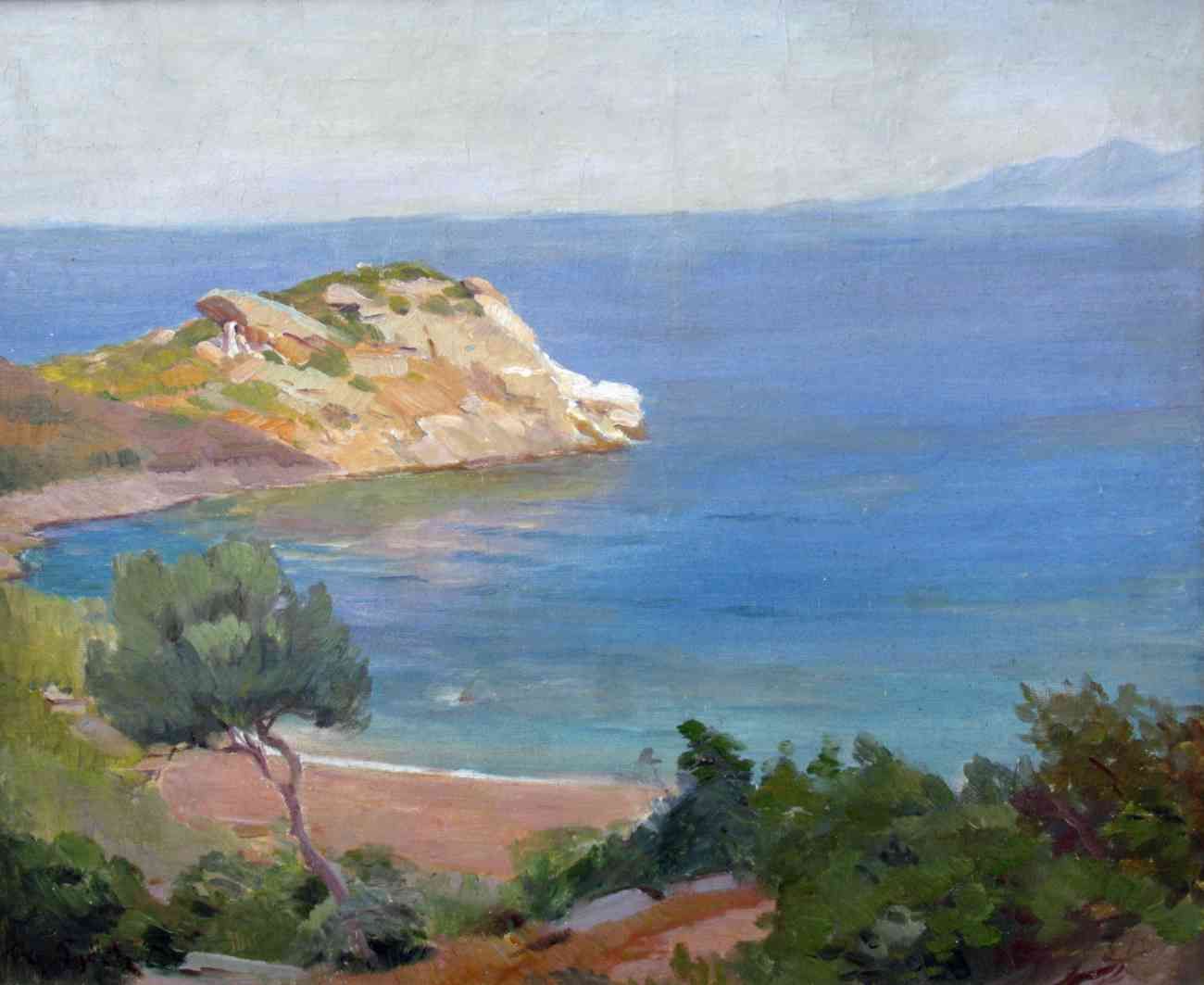
I cycled to Victoria Gallery today - to discover that they had sold the lovely Vulchev painting of Thassos and Kavala I showed a week or so ago. But I did buy this Rubev. I have been coveting a Rubev for some time - and was glad to find this one (also with a glimose of Thassos).

Tuesday, April 26, 2011

Two model blogposts


Two model blogposts – the first giving a superb example of the total undermining of the once great reputation of the British media. If this is what is happening in Great Britain, then imagine what the situation is elsewhere!
The second great post is on current aspects of Hungarian education. Amidst all the reengineering of administrative systems, we let the "political class" blunder around without any attempt at preparation. It's like the old Coronatation ritual - they are annointed with God's (The People's) blessing and so feel permitted to do what they want.
If only what we read could always have this depth!!
And, finally, an interesting angle on current Chinese political developments.
Moutafov is one of my favourites

Monday, April 25, 2011

The state of the state - part II


I've been silent the last couple of days simply because I have been surfing on the subject of state-building which I realised I had not mentioned in my paper on how the European expert system is supporting the development of institutional capacity in transition countries. I was started on the trail by an interesting article by the much-maligned Francis Fukuyama which caught my attention because it used the phrase "intellectual silos" - a hobby-horse of mine as my regular readers will know. I haven't read his 2004 book on "state building" but was able to read some of the interesting and critical articles he has produced on various aspects of governance assistance - and have suitably referenced them in my Varna paper, a final version of which I will shortly put on my website. But the matrix he has developed (with "scope"and "strength" as the 2 axes)is a useful framework for thinking. And complements Colin Talbot's blog which, serendipidously, appeared at the same time.
We live not in one state, but five. Our modern British state has evolved over time, adding new layers of activity. As each layer is added, the old ones are retained but become part of a larger whole. In this case, the five layers are: the security state; the judicial state; the fiscal state; the economic state; and, finally, the welfare state. Let’s use these five to compare the coalition government with its predecessors.
The security state encompasses the basic organs that allow the government to exercise a monopoly of force at home and abroad, and maintain the peace – the armed forces, intelligence services, police, and so forth. The security state prospered under both Margaret Thatcher and Tony Blair, if for very different reasons. For Thatcher it was principally ‘the enemy within’ that had to be fought; for Blair it was terror and crime. Both continued to expand the security state and extend its powers, and did relatively little to reform them. Neither took much notice of civil libertarian objections.
The coalition, in contrast, has set about cutting back the security state, radically reducing its funding and launching widespread reforms to the armed forces, police and prisons. This is the opposite of what Thatcher did as she squared up to the unions, especially the miners. It is either a very brave, or very stupid, approach to weaken the security state just when a government might need it most.
The picture on the judicial state is rather more mixed. Thatcher tried to weaken it in most areas but strengthened it in others (trade union laws). Blair somewhat strengthened it, especially through the Human Rights Act and the creation of the Supreme Court. The coalition seems bent on rolling back some of these reforms.
We all know what is happening to the fiscal state. For the first time a government is seriously trying to do what Mrs T never really tried and Mr B never even attempted – a permanent rolling back of fiscal expenditure. For an excellent picture on this see here.
The economic state, meanwhile, was significantly rolled back by Thatcher, and only very partially reinvented under Labour, through regulatory extension, until the financial crisis of 2008. Suddenly the economic role of the state moved centre stage again, in a very big way, to save the banks and re-stabilise the economy. But even flagship projects such as high-speed rail cannot hide the fact that the coalition is trying to erode the economic state again, through re-privatising the banks, avoiding major bank re-regulation, scaling back supply-side labour market interventions, abolishing regional development agencies and the like. They also want to carry out the biggest privatisation of all – turning the NHS into a provider marketplace.

And, finally, the welfare state. Thatcher tried to curtail it, but largely failed. New Labour expanded it – though not by as much as is often supposed. The coalition is clearly trying to roll back what it sees as the dependency state. It is doing this by marketising the NHS, reducing benefits, ‘freeing’ schools, and cutting welfare services across the board. Moreover, it sees these cuts as permanent. It is clear that the aim is to reduce taxes before a 2015 election in such a way that, like the privatisations under Thatcher, the cuts become politically impossible to reverse.
The coalition – or at least David Cameron – offers the alternative of the Big Society. But this is merely a post-modern version of Victorian do-gooding – charity and philanthropy dressed up in ‘crowd-sourced’ clothing.
So across the board this is a government seemingly intent on rolling back the frontiers of the state in virtually every area – a far more ambitious agenda than even the fabled Thatcher ever attempted
I'm not sure about the distinction between the fiscal and economic states - but, given what the UK Coalition Government seems to be attempting in the way of a shrinking of the state (and how the UK always seems to be blazing fashionable governance trails), this is clearly a space worth watching!

The town of Sliven on the Thracian plain has produced (and inspired) quite a few good painters (home town of Dobre Dobrev). This is a painting of the area by one of the other artists I admire - Vladimir Manski.
.

Saturday, April 23, 2011

making sense of what we seem to be saying


I’ve reached the point with my Conference paper of being able to read it as a critical outsider – interjecting, every now and then – a pointed „So??”. And, at this point, the old advice about the three-part structure of effective presentations becomes very helpful – „tell them what you’re going to say; say it; and then summarise what you’ve said.” It’s the last which is particularly useful. You read your paper through – and then try to summarise what it seems to be saying. Sometimes the results can be surprising! And, after yesterday’s post about Impact Assessment (part of the consultant’s toolkit) and a skypechat, I realised that I had left the discussion about the toolkit up in the air. If you looked at any of the IA papers I linked to yesterday, you will have realised how difficult member states such as the UK have found it (15 years and still not working) – let alone the European Commission itself. Why, then, is is something which the Commission has been pushing hard on new member states and accession countries? Perhaps simply that those pushing it (in the Development arm of the EC) don’t have the experience to understand that few countries have actually got it to work for them? Or is it a case of „cast-offs” being sold on – to the greater benefit of consultancy companies? The present version of my summary therefore reads as follows -
My argument so far has been that Technical Assistance based on project management and competitive tendering is fatally flawed – assuming (as it does) that “expert services” procured randomly by competitive company bidding can in a short period develop the sort of trust, networking and knowledge on which lasting change depends. I have also raised the question of why we seem to expect tools which we have not found easy to implement to work in more difficult circumstances. At this point I want to suggest that part of the problem is the hierarchical nature of the assumptions which underpin the whole TA system. The very language of Technical Assistance assumes certainty of knowledge (inputs-outputs) and relationships of power – of superiority (“experts”) and inferiority (“beneficiaries”). What happens when we start from different assumptions? For example that-
• Technical Assistance built on projects (and the project management philosophy which enshrines that) may be OK for constructing buildings but is not appropriate for assisting in the development of public institutions
• Institutions grow – and noone really understands that process
• Administrative reform has little basis in scientific evidence . The discipline of public administration from which it springs is promiscuous in its multi-disciplinary borrowing
• When we try to make public institutions work better for their citizens in transition countries, we are all working in unknown territory. There are no experts.

Once one accepts the world of uncertainty in which we are working, it is not enough to talk about more flexibility in the first few months to adjust project details. This is just the old machine metaphor at work again – one last twist of the spanner and hey presto, it’s working!
At this stage in the paper I introduce Robert Chambers’ great table which shows different roles and relationships for development work – and the move to a more humble and collegial working. But one has to ask what stops this - and here I am brought back to my experience in 1992 with the EC Energy network which I realised was simply a front to allow Western companies to caapture the new Eastern European market. The late lamented Peter Gowan had a lot to say about this - and this, I think, is where the conclusion of my paper should be heading. A proper critique of TA is that it is seeming to help transition countries while in reality ensuring that their state system will never agaion have any capacity to challenge the prevailing European ideology.
The painter is the great mid 20th century mountain painter Cyril Mateev. All miountain associations should buy his stuff - available generally for about 500 euros

Friday, April 22, 2011

Good Friday's new norms


My father would have been initially horrified (if not altogether surprised) that this morning – Good Friday – found me reading papers about, first, Impact Assessment (IA) and, then, Project Management (PM)!! But in many ways, it is appropriate. After all, these are some of the central elements of the new secular religion which we have learned to worship in the last 4-5 decades (I’m not joking). But, in redemption, let me pray that –
• I was last night cursing Google for the way it feeds the frenzy of the contemporary and dishonours the nobility and wisdom of so many of our immediate predecesors (I could trace no reference to my father or any of the great teachers I had – save one memorable English teacher (Mabel Irving) who died recently and was very nicely remembered.
• I have been tuned (as usual) to BBC 3 Classic Music – in particular Through the Night whose choice today has very much respected the date and theme of death and resurrection.
• The readings of IA and PM have been critical (as distinct from adulatory) ones.

Let me explain. I first began to hear of this powerful medicine called Impact Assessment about ten years ago and, frankly, found it very difficult to understand (which is entirely appropriate for a wonder ointment). My background is political science and policy analysis (I had one of the first postGraduate Degree courses in the latter subject in the early 1980s). At one level, therefore, IA seemed to me to be common sense – enjoining us to think about the various ways which proposed legislation would impact on social groups and the costs (if not counterproductive consequences) it would bring. But, of course, it came from a specific political agenda – which was hostile to government intervention. And it did require us all to pay particular attention to the costs which Regulations would have on business – particularly the Small and Medium Sized Enterprises (SMEs) which have been the West’s holy grail of the past few decades. Fine – and so were the „ex-ante impact assessments” which also became all the rage a decade or so ago in the European Commission. I met a Bulgarian Professor recently who was apparently a specialist in this (as she had been of Stalinist planning a couple of decades ago). Fine. I decided therefore to read the 2006 book which I had found recently on the internet about the subject - Andrea Renda’s Impact assessment in the EU - the state of the art and the art of the state. I found this a bit, well…Stalinist …but her more recent slides for the OECD seemed a bit more critical and provocative ; and also here . And this academic paper threw even more light on the matter.

I alighted today on project management because of a last bit of cleaning up to the Varna paper – and had an incomplete reference to a paper by Roger Lovell on civil service reform which used the dimensions of “agreement to change” and “trust” to distinguish the very different roles in the change process of allies, adversaries, bedfellows, opponents and fence sitters.
Project Management is what I did not have enough of in the 1970s and 1980s - and have had a surfeit of since! I was then led to some good papers here, here and here.

Der Spiegel has a disturbing picture of what Europe means for some Bulgarians and this article remiinds us of how life is lived elsewhere.
Glory indeed to God!
The painting (Maglitz Monastery) is by one of the most famous Bulgarian "Secessionists"(as the Nouveau Art is called here) - Milev. Maglitz has great wine!!

Thursday, April 21, 2011

Writing


Writing seems to be even more a tool of power than it was in 1947 when George Orwell wrote his Politics and the English Language. University specialisms have multiplied; professions have developed and expanded their empires; management has developed its own language. Obfuscation in the pursuit of an unchallenged life is the name of the game.

I’ve spent a significant part of my life writing papers – but only recently recognised this. This blog tries to explore the reasons why I have spent so much time struggling in front of a keyboard. I started by writing quasi-academic papers simply because I was looking for ways to improve the way local government in my country worked.
I had become a local councillor and was horrified at the way the municipality (staff and councillors) treated the (low-income) citizens who had elected me. Instead of responding positively to their efforts at self-help, they ridiculed and undermined them. And this seemed to be systemic – something to do with the assumptions which came with the bureaucratic structures we used.

 This was the early 1970s and these structures were under fire (from writers as varied as Bennis, Fergusson, Toffler and most memorably by Donald Schon whose 1970 Reith lectures (published as Beyond the Stable State) had me riveted in front of my father’s radio. I was summarising the more interesting books and papers – trying to apply their open, participative processes to my situation – and describing what happened in Occasional Papers in a Local Government Unit I established. No “peer review” – so perhaps I fell into some bad habits! I was writing for myself – trying to make some sort of sense of the confusion I felt. On the other hand, it gave me the freedom to develop my own “voice” – and adjust my style in the light of direct feedback from readers as distinct from academic custodians of good writing norms!

At the time I was a lecturer – but being a politician forced me to simplify my language to make myself understood by colleagues and the electorate! That was a great training! I had to “unlearn” a lot of big words and complicated phrases which university life had given me; and to learn to call a spade a spade!

Then I wrote a short book to try to explain in simple terms why some major changes being experienced by local government were necessary and also trying to demystify the way the system worked. That made me realise how few books were in fact written for this purpose! Most books are written to make a profit or an academic reputation. The first requires you to take a few simple and generally well-known ideas but parcel them in a new way – the second to choose a very tiny area of experience and write about it in a very complicated way.

After that experience, I realised how true is the saying that “If you want to understand a subject, write a book about it”!! Failing that, at least an article – it’s amazing how what was a clear understanding in your mind is mercilessly exposed as deficient when you put it on paper! Gaps in your knowledge are exposed – and you begin to have the specific questions which then make sure you get the most out of your reading.

My first real publications were chapters in other people’s books and national journals – which described the experiences in community development and more open policy-making processes some of us had introduced into Europe’s largest municipality. I was “sunk”, however, when one journal then asked me to write one page every 4 weeks. I just couldn’t compress my thoughts that way. Although I was reading a lot, I couldn’t write in abstract terms – only about my own experiences, trying to relate them to the more general ideas.

Since I became a consultant in Central Europe and Central Asia and have written less passionately and more analytically for very targeted (and narrow) audiences. Basically what I have been trying to do in the last 10 years is to summarise our experiences in Europe of changing systems of government (eg decentralisation) and indicate what it might mean for the countries in which I was working. It has always been the HOW – rather the WHAT – of change which has fascinated me. One of the things which has disturbed me in the last decade or so is the way complex processes have been reduced to simplistic formulae in subjects such as the management of change and government accountability – their ethical dimension being sucked out in the process. British Governments have become impatient and have imposed one (centralised) fashion after another – in the process making us cynical about both change and the specific nostrum of the moment.

At one stage I wrote a short paper about the writing process – and presented it to some students. I was intrigued to learn that many of the ideas reflected a paper I had never heard of written by C Wright Mills - On Intellectual Craftsmanship

The painting is an Ivanov - I think Savi

Wednesday, April 20, 2011

In praise of mugwumps


I think I stumbled on an important general insight yesterday when I said that most of my written work is done as a non-specialist, an outsider, trying in my writing to tease out some problems I felt about the particular conventional wisdom I was facing in my work.
Heroes generally have heroic aspects – strength, valour. But my two heroes are innocents – Voltaire’s Candide who is increasingly puzzled by the contradiction between the optimistic philosophy of his tutore Dr Pangloss and the viciousness of life he experiences. And the little boy in the Hans Christian Andersen tale who dared to say that the Emperor had no clothes.
And they are my heroes, I have to recognise, because I have always felt a bit puzzled by the certainties of others. Psychologists would doubtless trace this back to my growing up on the class border – living in a mansion (belonging to the Church) in the West End but going to a state school in the East End. Playing the games (rugby, rowing and cricket) of the richer kids – but becoming a young socialist and, later, Labour councillor. And, as a politician, I chose to spend my time in the curious interstices of community groups and street bureaucrats at one level and, as a strategist, with senior bureaucrats at another level. Not for me the world of Party Conferences and ideologues!
By spending time with such different groups (and even trying to bring them together), I realised how deficient our various perceptions were.
And, for 17 years, I tried to reconcile academic work with politics – impossible at the end – but, while in academia, I was ploughing the unfashionable furrow of inter-disciplinary activity (and also trying to bring academics and practitioners together).
In short I have been a full-blown mug-wump (someone on a fence with his mug on one side and wump on other!). Not generally a comfortable position! But I liked the metaphor of a bridge – particularly the Central European joke that, in peacetime, horses shit on them and, in wartime, they are blown up!

From my personal experiences, I developed a theory about politicians and their behaviour by pointing out that they are pulled in four different directions – by their party (or funders in the US case); by their voters (if the system has geographical constituencies); by the government officials who give them the info and advice; and by their own colleagues with whom they spend so much time. Few politicians can put up with the problems of trying to reconcile the very different messages they receive from these 4 worlds and choose to become servants of one of them – hackmen, populists, bureaucrats and ?? respectively.
But I felt that the effective politician is the one who remains open to all the signals – and tries to craft a synthesis.
And I suppose I’ve continued this perspective in my new role of consultant in the last 20 years – both in how I interpret my role and in how I approach the various papers I have written on such various subjects as decentralisation; civil service reform; implementation of the European acquis; training; or capacity development.

Most people write (however unconsciously) as members of a particular group – be it organisational, political or professional. This affects both the language they use – and their perspectives. I have spent time with most groups but don’t belong to any (I recognised in my 2006 paper that it was not unfair to use the word „mercenary” of us) – and can therefore better appreciate both the strengths and weaknesses of the specialists.

At last the temperature shows some sign of getting above 6/7 – here in Sofia only 200 kilometres above the Aegean! What is this? God’s vengeance on Greek debt??

Today's painting is by Russi Ganchev whose work is rather mixed. Occasionally a bit pedestrian,an exhibition I saw in 2008 showed some like the above. I know nothing about him except that he was a landscape painter who was born in 1895 and died in 1965

Tuesday, April 19, 2011

Capacity development


In fact I didn’t think much of the OECD Guidelines paper on Fragile states I mentioned yesterday. It seems a good example of technocracy – full of jargon and giving little sense of the moral and existential issues involved in this work. I was more stimulated by a paper I was sent last week from the Learning Network on Capacity development entitled Training and Beyond; seeking better practices for capacity development by Jenny Pearson. Her paper echoes many of the points in the definitive paper I wrote on training in late 2008 after my three years of experiences of leading training projects in Kyrygzstan and Bulgaria. It was the former work which introduced me to the concept of capacity development.
It’s one of the pleasures - indeed privileges - of my work that it has given me the chance to learn about subjects about which I know so little. Academics, for example, think that training is a dawdle – so they generally make bad trainers. At least I knew I wasn’t a trainer – I find it difficult to shake off the habit of pontification (I call it brainstorming!) which both academia and politics developed in me. So I chose to look at what my training specialists were saying (and sometimes doing); at what the books said; reflected; encouraged experimentation; had it discussed; changed direction; reflected; wrote it all up; and, if I was lucky, was able to build on whatever insights emerged in my next project.

And I was lucky after I wrote this paper on the development of municipal capacity in Kyrgyzstan to be able to build on the insights for my next project in Bulgaria (where I learned the literature of implementation of the European Acquis - which uses the giveaway word "compliance"!)
Capacity development was in fact the focus of the critical 2007 European Court of Auditors’report on EC Technical Assistance – and I’ve made the comment that the EC response (its Backbone strategy) indicated they had not really grasped the importance of this concept.

I will be taking a final copy of my Varna paper to the printers here in a few days – so that I can distribute the paper to the NISPAcee conference participants. And there is one issue I have not yet properly resolved in my thinking. Everyone seems to agree that there are too many cowboy companies getting business from the EC’s multi-billion euros Technical Assistance budget. Most companies allowed to tender have a „take the money and run” attitude. I can name the number of companies who have a serious interest in knowledge development and transfer on the fingers of one hand. The Americans have an interesting model which has allowed a high-quality think-tank (The Urban Institute) to win long-term contracts in several countries to assist municipal development. This approach has several advantages
• You are buying proven quality
• The contractor’s basic asset is their reputation – fear of losing it acts as powerful incentive to ensure it recruits and offers good experts (unlike the present system)
• the contract gives the flexibility to negotiate adjustments from time to time.

This perhaps gives us some clues about a possible alternative to the present procurement system the EC is currently using - which arguably gives us the worst of all worlds.

Today's Bulgarian painter is one of my favourties Dobre Dobrev (1898-1973). Born in Sliven and graduated 1925 from Prague Fine Arts Academy. Until 1938 he had lived and worked in Republic of Czech. Afterwards he came back to Bulgaria and to 1954 he lived in Sliven (then highly industrial) and afterwards in Sofia. He created paintings revealing the life in villages. He painted landscapes, daily scenes, figurative compositions. His preferred topic are the markets in his native town of Sliven

Monday, April 18, 2011

The painting passion


By what process did I become a passionate collector of painting – let alone of Bulgarian realist painting of the mid 20th century? And what drives me now to work to try to craft a small book on the subject – let alone seek out the specific genres which I now feel I lack? I find I have sufficient landscapes (seascapes also grow apace) – but lack people and scenes of normal human activity. I would like some of the amazing heads pencilled by Boiadjiev (Nikola) and Uzonov. As well as populated landscapes. Also some signs of industrial and commercial activity; and some unusual still lives (not flowers but Rembrandt meat!) And more aquarelles. But why what process do these signals come to me? It’s a totally mysterious process.
I had no paintings in my home in Scotland – although I do remember vividly the large print which adorned the dining room/study of my father’s manse. It was of a leafy, rocky shore at Roseneath where my father was born – with a glimpse of the River Clyde beyond. I lived in Berlin for a couple of months in 1964 and was stunned by what I saw in the galleries there. Georg Grosz and Kathe Kollwitz made a big impact – and later the less well-known people such as Wilhelm Lehmbruch whose sculptures I stumbled on by accident in what turned out to be his home town. On the various trips I made for European meetings in the 1980s, I started the habit of visiting the art galleries – the Belgian realists of the end of the 19th Century on display in the main Brussels Gallery charmed me. After my (limited) sense of British artists, the European paintings I encountered during that period showed me something very different – reflecting I now realise as much the selection process of british art custodians as the different British experience. Too many British custodians of art in my time were high-class people whose style was discouraging to the ordinary person. It was ironic but typical that I first encountered sketches of British miners of the 1930s not in Britain – but in a German town which was honouring the work of an 80 year old German artist Tina von Schullenberg who had managed to inveigle her way down Nottingham mines in the 1930s and produce great stuff. She was gracious enough to send me some of the sketches later. Of course, I was familiar with (and fond of) the Lowry stick men of Manchester mills of the 1940s; with Ralph Steadman’s contemporary satire and had a copy of John Berger’s Ways of Seeing – but nothing had prepared me for the originality of the European realist works of the early 20th century. So I suppose that’s when I first opened up to art.
But it was only when I started my nomadic life in the 1990s that I started to acquire some paintings – initially some very cheap oils in Romania. Surprisingly for me, two still lives were my first (and last such) acquisitions – bought I suppose for their colour and composition.
But still my passion lay dormant. For a few years (1999-2005) oriental carpets became my passion - as my assignments in Central Asia gave me access to the glory of the silk and other carpets of not only Afghanistan but Turkmenistan. So much labour going into this work.
It was a visit to the Phillipopolis Gallery in Plovdiv in May 2008 which really activated my painting passion. This is a private gallery housed in a magnificent old Bulgarian house in the old heart of the town which was rescued and brought back to its glory by the new owners. Now you can view their collection; contemplate possible purchases; eat in a wonderful restaurant in the basement; or have a quiet coffee on the terrace which overlooks the town. See for yourself here. The atmosphere and reception was so gtreat that, without knowing anything at that stage about Bulgarian painting, I bought a small Zhekov and a large Mechkuevska and two contemporaries. So, be warned!

Today’s painting is by Vladimir Dmitrov (The Master) 1882-1960. Born near Kyustendil which is half way between Sofia and the Serbian border, he started his career as a clerk. He is considered one of the most talented 20th century Bulgarian painters and probably the most remarkable stylist in Bulgarian painting in the post-Russo-Turkish War era. His portraits and compositions have expressive color, idealistic quality of the image and high symbolic strength. Many consider his artwork a fauvist type rather than an expressionalism set. Vladimir Dimitrov Art Gallery of Kyustendil has more than 700 of his oil paintings.
The OECD has just published a small book I need to read before the Varna Conference. It’s on the issue of „fragile states”. As the blurb says
Recent events in the Middle East and North Africa – where the legitimacy of the reigning power-holders has been seriously questioned by popular protest – bring home the threats to global stability posed by the world’s 30 to 40 fragile states. State fragility threatens the livelihoods of one in six people on the planet. It poses particular challenges for donors, who have witnessed the hopelessness of trying to graft Western institutional responses onto fragile contexts.
Viable solutions need to take into account the particular distribution and dynamics of local power; they need to recognize the trade-offs between development objectives, the fine grain of social expectations and the evolution of regional dynamics.
Finally a great new voice for me - Jasmin Levi

Sunday, April 17, 2011

The state of the state


I found myself musing (briefly) about the Third Way this morning – thanks to a post which suggested that (a) „the left’s ” thinking about the State had not kept up with recent events and (b) that corporate power was now so great that the state could no longer deliver a decent agenda on social justice.
This is in fact what I was arguing some months back . One of the post’s discussants referred to a 2001 book I had never heard of The Enabling state – people before bureaucracy which turns out to have been an articulation of Third Way thinking partly written by Mark Latham a rather abrasive Leader of the Australian labour Party for a few years from 2003. By then, of course, the concept of the Third Way had flowered and quickly wilted in England (it never caught on in Scotland). During the surfing, I came across a couple of other useful articles – first a good overview of the 3rd way concept – which deserves its place in history Last summer I started Philip Blond’s Red Tory book which then looked as if it might play the same role for David Cameron’s Conservatives in the UK – bit it too has disappeared from sight. A few days I saw a reference to Blue Labour which suggested that someone was up the similar games around the new Leader of the Labour Party. Plus ca change, plus c’est la meme chose.
The second useful paper was one by Colin Saunders which explored whether we still need the welfare state
Looking at these papers and the material on privatisation of public services brought home to me how sterile is the focus of so much of the public admin literature on organisational structures and management issues. We’re moving deckchairs on Titanic – rather than looking at the key issues of ownership (privatisation, PPP etc)and services (welfare). The British Tories really took the wind out of Labour sails last autumn when they started to talk about letting public officials take over the management of public services. It was shocking how Gordon Brown let the tradition of mutualism wither. This is the debate I would like to get on top of....
It's still very cold here in Sofia (about 6 during the day) - but the morning sun held promise so we ventured forth at 10.00 with our single bike onto the cycle path which quickly took us to Eagles' bridge and the large park which runs alongside the main Boulevard in the direction of Plovdiv. Very pleasant - and we explored the park later in the afternoon.

And back to my book in progress on Bulgarian painting - this is one of the famous ones Boris Denev 1889-1969. Born Veliko Tarnovo; In 1903-1908 he was teacher in drawing in Tarnovo. His first solo exhibition as amateur artist held in Sofia in 1909. From 1909 to 1913 he studied painting under in Munich. As official war artist from 1914, he created battle oil paintings, many sketches and drawings depicting soldiers’ everyday life. His preferences were in the fields of landscape and portrait. He was inspired by the beauty of Melnik, Samokov, Plovdiv and Sofia region.
Stripped of his membership of the Union of Bulgarian Artists for a decade for failure to comply with the cultural norms of the regime until being readmitted in 1956. During this period, he was forbidden from painting in the open air - and had to resort to painting the back of his house! This painting went recently for 1,000 euros

Friday, April 15, 2011

return to the future


My resolution to give a daily link to a couple of the books in my Google library has clearly fallen by the wayside. So let me try again. And first with a name from the past which one is hearing more and more these days - Karl Polanyi. He wrote in the 1940s about the rise of capitalism and its tension with democracy – big themes to which we are now returning. And here is an intellectual biography
The recent interest bears out the comment in a recent Compass (leftist British Think Tank) pamphlet that
Historians like Arthur Schlesinger and theorists like Albert Hirschman have recorded that every thirty years or so, society shifts - essentially, from the public to the private and back again. The grass, after a while, always feels greener on the other side. The late 1940s to the late 1970s was a period of the public, the late ‘70s to now, the private. Now the conditions are right for another turn, to a new common life and the security and freedom it affords, but only if we make it happen by tackling a market that is too free and a state that is too remote
I was so taken with this quotation from that I used it to introduce the table in which I tried to summarise the key political debates of each of the decades since the 1940s which is the last part of my Sceptic’s Glossary
Of course, reading such books is pretty useless unless we can in some sense exert some collective control over the madness which surrounds us. But our cynicism about politics makes this difficult which is why the second book is so important – Why we hate politics by Colin Hay.

As a bonus, these throughts from Stuart Weir on how power is exercised in UK.
I'm very tempted by this 1940s Vulchev painting - of Kavala and Thassos

Thursday, April 14, 2011

worthwhile briefings


I mentioned yesterday a site which has tracked over the past decade the performance of commercial companies which have been given the opportunity to run public services both in Europe and globally. I’ve now had a chance to download and glance at the various briefing papers on its site about the costs to governments and consumers of allowing commercial companies to get involved with the management of services such as water and health – and it’s one large eye-opener. Privatisation has become a term to avoid – hence the proliferation of new terms such as PPPs. The various papers on the site give a blow-by-blow account of the breakdown of services; the government bailouts; the contractual complications – a never-ending list of disasters from around the world. I hadn’t realised that basically 2 giant companies dominate the water market. Nor that Czechia, Slovakia and Poland refused to take any more – and passed legislation recently to limit the role of the private sector in health services. And the Slovak Government has been hit with a 2 billion law-suit from one of the companies denied access to what they clearly regarded as rich pickings. The report of September 2010 on private water companies is a typical example of a great briefing.
And a good tough article from Stiglitz on the scale of greed in the USA The painting is one by the famous Ivan Christov (1900-87) of whom I know very little

Wednesday, April 13, 2011

Partnerships


Delegation is a great thing! Yesterday morning a cameo role at the start of one of the many workshops being held in Bulgaria by the project of which I am (nominal) Team Leader – a one-day one on Private Public Partherships (PPP). All I have to do is to turn up at the odd workshop and check all is going well – and, in the process, I learn a bit about the subject matter in hand. Take yesterday’s. In the 1970s and 1980s we blazed a trail in Glasgow on PPPs with various regeneration projects bringing a variety of public agencies together with community groups and the private sector. I remember speaking at places as far apart as Colorado and Maastricht about what was in the 1980s still an unusual structure and experience. But the term has changed its meaning since then – and, in EC hands, it seems to have become a neo-liberal tool to prepare the ground for the commodification of public services. This is, for the moment, a suspicion on my part – so I limited myself to a comment to the the two Bulgarian trainers and will now do some catch-up reading eg a critical review of a 2004 EC Green Paper on the subject from the
Public Services International Research Unitat Greenwich University which has been doing a good job over the last decade of tracking the privatisation bandwagon.
Another good public admin resource which I have come across is this wiki page created by a graduate student from which you can download quite a lot of useful articles – eg on the concept of „public value” which was flavour of the month a few years back when NPM was apparently going out of favour (emphasis on „apparently”) and even attracted a UK Cabinet paper on the subject.
Political scientist Gerry Stoker probably gives the best assessment
This time last year I was musing on departmental silos.

Saturday, April 9, 2011

Pride and humility


The mornings are still surprisingly cold here in Sofia. But, by the time I was ready to go for some of the delicious bread in the Dutch shop, the sun was offering some warmth. The wind, however, was still strong as I took advantage of the cycle path which runs in parallel with the small stream which forms the thread of the city’s inner circle. As I came back, I noticed teenagers bagging the debris around the path and stream. “Is this voluntary or compulsory work” I asked one. “Voluntary” he answered positively. “It’s linked to a media campaign – but we’re doing it here in our local area rather than where the main campaign is focusing its efforts. I go to bed with a better feeling that I’ve done something positive”. I congratulated him. I couldn’t see this happening in Bucharest!

I’ve just uploaded a relatively coherent version of the paper I shall present to the Varna Conferebce in mid-May to my website(updated 28 April). It's now called Flesh and Blood - the EC's Backbone strtagey meets impervious power. (updated on 9 May)
I’m not the only person with these concerns about Technical Assistance. My friend David Coombes also wrote a powerful piece for the 2006 Conference to which I submitted my original critique.
I’ve been wrestling with the conclusion for which I am drawing on the text of a recent blog which suggested that those international consultants in institution-building who have been using British experience might well wish to consider whether in fact the rest of the world has much to gain from its particular version of New Public Management. It’s too much to expect any breast-beating or sackclothes from them - but a bit of humility would be appreciated. I’m now trying to make the link in the conclusion back to the quotation with which I start the paper –
I have long given up on the quest to find the one universal tool kit that will unite us all under a perfect methodology… as they will only ever be as good as the users that rely on them. What is sorely missing in the development machine is a solid grounding in ethics, empathy, integrity and humility
This time last year I was posting some useful stuff about the process of change – this post summarised the key roles which Malcolm Gladwell identified for change in his best-seller - The Tipping Point
The painting is one of a series available on The Guardian website by women artists active during the world wars whose work has been forgotten.

Thursday, April 7, 2011

Cowboys, bodyshops and backbone


I’m on the home strait now for the paper I shall be presenting (insallah) to the Conference of the Network of Institutes of Schools of Public Administration in Central and East Europe (NISPACee) on the Black Sea coast here in Varna 19-22 May. It’s now in two parts – with the first part dealing with the EC’s recent attempt (The Backbone strategy) to make its Technical Assistance more effective. The second part explores the absence of any theoretical basis to its institution-building efforts in those countries with regimes which share the feature I have decided to call “impervious power”. In 2006 I had made a critique at the same Conference which was mainly concerned with the procedural aspects of how the EC found experts for its institution-building work in “transition” countries – but which ended by suggesting that neither the EC nor the experts really had much of a clue about the process of administrative reform in such contexts. This new paper is a much more solid version which takes account of what the EC itself has been doing in the intervening period to sharpen up its act – what it calls its Backbone strategy.
I find it significant that that 2008 strategy failed to give any analysis of the commercial companies and the (freelance) consultants on which the entire multi-billion euros EC system of Technical Assistance hinges. Companies (but not experts) are scrutinised by the EC before they are allowed to tender but only for the volume of their business – not for the quality of their work. The result is that many „cowboy” companies are in operation – who skilfully manipulate the rather simple evaluation system used for the competition for projects. There are two basic tricks. The first is to have a few excellent project writers at HQ – and to name as experts high-quality people who just happen to be ill when it comes to taking up their appointment! The second is to slip a few thousand euros into the hands of some locals.
And, as far as experts are concerned, the only thing that counts for companies is the extent to which the experience shown in the CV matches the particular job requirements. The quality of the work done by the experts in the past is irrelevant. During my 20 years in this game, a company has interviewed me just once - BMB Arcadis (now Mott MacDonald).
Working on this paper has made me realise that the continuity which capacity development requires cannot be provided by a procurement system which tries to carve knowledge and skills into commodifiable products and which allows in companies which are little more than "body-shops". Profit-oriented companies simply take the money and run. I can name the number of companies who have a serious interest in knowledge development and transfer on the fingers of one hand. And twinning isn’t the answer – nor the latest wheeze of „south-to-south” institutional links.
The Americans have an interesting model which has allowed a high-quality think-tank (The Urban Institute) to win a long-term contract within which it has the flexibility to negotiate adjustments from time to time.
The sketch is by Alexander Bozhinov whose house next door here in the heart of Sofia is still kept in his memory

Wednesday, April 6, 2011

Back in Sofia


Bucharest and Sofia are only 350 kilometres apart – but two European capitals could hardly be less alike. Nowhere in Romania could you find the street life of the neighbourhood of my rented flat in the heart of Sofia. We left Bucharest at 08.30 and reached the flat six hours later after a leisurely drive. It’s just around the corner from one of the galleries with old painting – InterNos - and we paid a visit while we waited for Blago to come with the keys. An elderly lady and a tousled artist were sharing a raki on armchairs with the owner. The flat is in the quiet old area (with narrow streets) between Vasil Levski Bvd and the circle road Evlogi Hristo Georgiev VI just before it hits the huge expanse of greenery on which the vast brutal Cultural Centre squats. We’ve spent many happy hours cycling these parks - which stretch from the University down to the Viktoria Gallery on Yuri Gagarin Street (ever had the sense that socialism once rules here?) on the east.
The flat is the bottom storey of an old house still occupied by the descendants of a dramatist in whose memory a plaque adorns the wall – and next door is a very gracious if crumbling classic house in which the cartoonist Alexander Bozhinov lived and belongs now to the Ministry of Culture who let it out for painting classes etc. Typically for Sofia, tiny shops (many hardly more than a hole in the wall!) are scattered in the neighbourhood which offer services such as dress makers and repairers (haberdashery is an old word which springs to mind), pedicure, pet food (yes some specialise in that!) and products such as coffee and cigarettes (real Bulgarian specialities!), painting and the suberb Bulgarian vegetables. Some of their owners are young – some are old – and often they have pulled a table and a couple of chairs out on the pavement and are smoking a cigarette with a friend. I see this as the essence of the Sofia I love – individuals determined to have their own existence – living a simple life at their own pace. A rarity these days! I almost added “candle-stick maker” to the list of services available in the neighbourhood as I actually went out to look for candles since we weren’t sure if the electricity would be reconnected before nightfall. It was. A sunny evening allowed us to enjoy a bottle of delicious Sliven Chardonnay in the small garden as we tried to entice the various neighbourhood cats to our garden. And then a brief walk across the small burn which acts as a moat around central Sofia looking for the old house which boasts a Restaurant (“The Wall” is I think its name) and encountering instead good food en plein air in a pub/restaurant called Cactus.
The sketch is a Tanev which wasa up for sale here recently